In this guide
"Keeps hot for 12 hours" is the most abused number in the drinkware catalog. Every factory prints it; very few can hand you a test report that proves it on your model, at your capacity, across a full production run. This guide gives importers a working standard: a test method, realistic performance bands, a spec-sheet template, and a verification routine — so the retention claim on your listing is one you can defend.
1. How vacuum insulation actually works
A double-wall vacuum bottle is two stainless shells with the air pumped out of the gap between them. Heat moves by three routes — conduction (through solid contact), convection (through moving air), and radiation (infrared). The vacuum gap removes the air that would carry convection, and the two thin walls carry almost no conduction. What remains is a small radiative loss plus whatever leaks through the lid and the mouth. In other words, the vacuum gap does the insulating, not the steel grade. That single fact reframes most marketing claims about "premium metal = hotter longer."
2. The standard heat-retention test method
There is no single global legal standard every factory obeys, but the method used across the Yongkang–Jinhua cluster and referenced by SGS/TÜV-style testing is consistent enough to standardize on. The procedure:
- Pre-condition the vessel at room temperature (~20–25°C).
- Fill with water at 95°C ± 1°C, seal the lid as the customer would use it.
- Measure internal water temperature at 6h, 12h and 24h without re-opening.
- Record the retained temperature and the ambient temperature alongside it.
Cold retention is tested the mirror way: fill with water at ~4–6°C (or ice-water slurry) and measure how long it stays below ~10°C. The same vacuum that holds heat holds cold, so a good hot-retention bottle is also a good cold bottle.
3. Typical retention by product type
The table below shows industry-typical bands for quality double-wall vacuum stainless. These are realistic ranges, not guaranteed specs — your exact model will land inside the band based on capacity, neck width and lid. Always confirm a written figure per SKU.
| Product type | Typical hot hold (6h) | Typical hot hold (12h) | Typical cold hold |
|---|---|---|---|
| Narrow-neck vacuum flask (0.5–1 L) | 70–78°C | 55–65°C | 0–6°C for 18–24h |
| Insulated water bottle (wide mouth, 0.5–0.75 L) | 62–72°C | 45–55°C | 0–6°C for 12–18h |
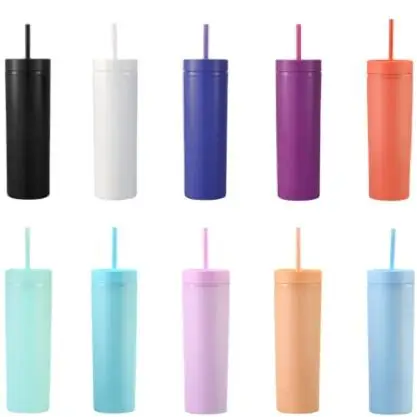
| Tumbler / can cup (with lid, 0.35–0.5 L) | 52–64°C | 38–48°C | 0–6°C for 8–12h |
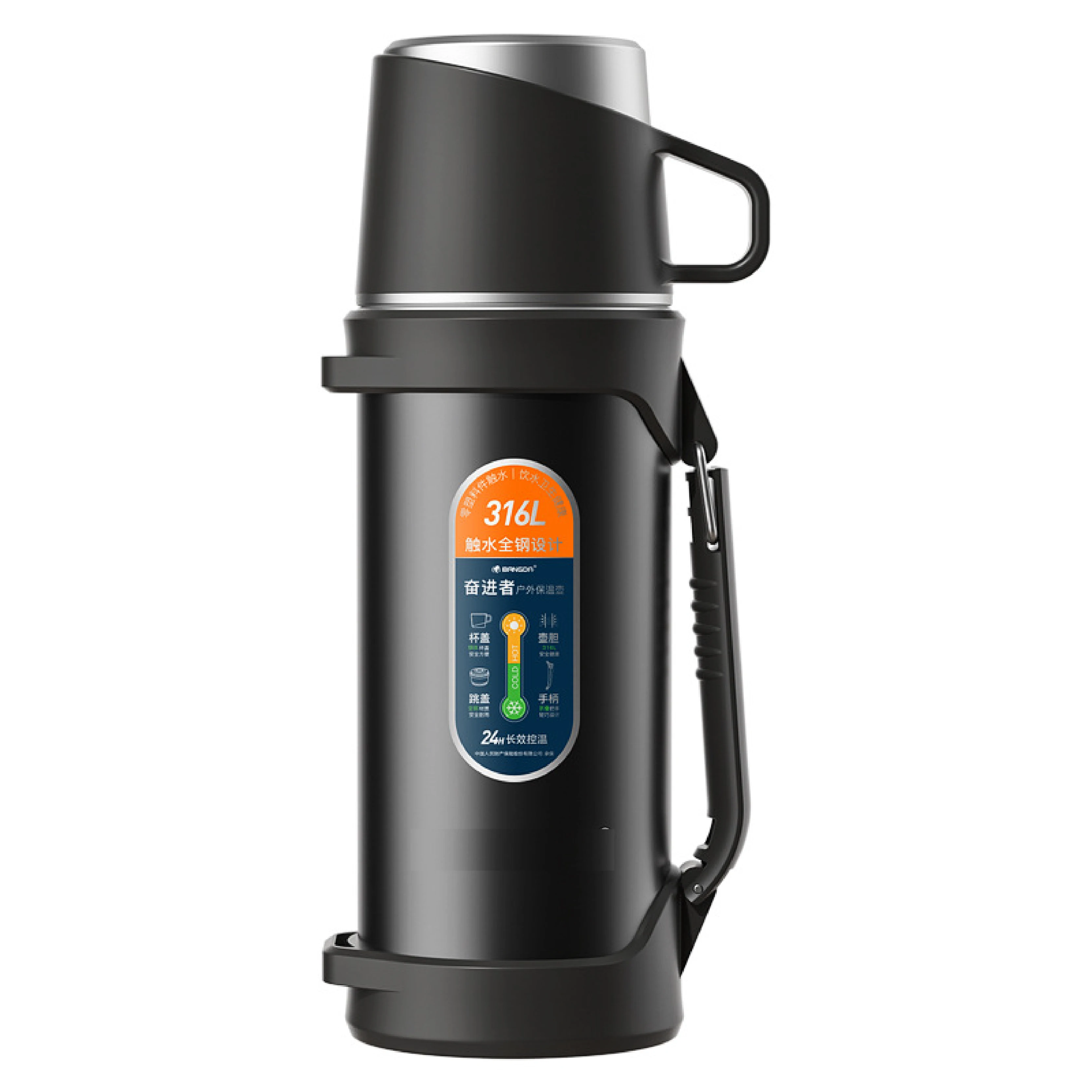
| Large outdoor thermos (2–3 L) | 75–82°C | 62–70°C | 0–6°C for 24h+ |
| Insulated food / lunch container | 55–65°C (food) | 40–50°C (food) | 0–6°C for 8–12h |
4. What to write into your PO / spec sheet
A vague claim like "12h hot" protects the factory, not you. Turn it into a measurable acceptance criterion:
| Spec line | What to write | Why it matters |
|---|---|---|
| Test temperature | Fill at 95°C ± 1°C | Removes the "we tested at 100°C" trick |
| Acceptance at 6h | ≥ 62°C (or your band) | The number customers feel at lunch |
| Acceptance at 12h | ≥ 45°C (or your band) | The number on the box claim |
| Tolerance | ± 3°C per batch | Catches drift between runs |
| Batch report | 1 random unit / 500 pcs tested | Proof, not a promise |
| Lid condition | Tested with supplied lid sealed | Lid is the real leak path |
5. Factors that quietly kill retention
When a sample tests great and the production lot disappoints, it is almost always one of these:
- Lid seal quality. The lid is the weakest point. A worn or thin silicone gasket, or a lid that does not seat square, leaks heat faster than any wall defect.
- Mouth width. Wide-mouth bottles and tumblers expose more surface to air each time they are opened and lose more between openings.
- Pre-heating / pre-chilling. Rinsing with hot water before filling hot liquid (or cold before cold) buys 5–10°C at 6h. Buyers who skip this report "under-performance" that is actually user error.
- Incomplete vacuum. A pinhole or a slow leak in the weld drops retention within weeks. This is a real factory defect and the reason batch testing matters.
- Wall grade. 304 vs 316 changes corrosion resistance, not retention — see the FAQ.
6. How to verify batch consistency
One golden sample proves nothing; a production lot is what ships. A practical verification routine:
- PO clause: retain-temperature tolerance ±3°C at 6h; batch test report required.
- First two shipments: pull 1–2 units per carton and re-run the 6h test at your warehouse (a $20 thermometer is enough).
- Ongoing: rely on the factory's per-batch report, but spot-check one carton per container quarterly.
- Record: keep a simple log of measured vs claimed; a downward trend flags a vacuum or weld problem before customers complain.
At SSMug, every shipment includes a batch retention report and the food-contact certificates for steel and plastic parts (lid, gasket, straw) — SGS, TÜV, ISO 9001, FDA and LFGB backed.
7. Common "fake warm" claims to avoid
- "24h hot" on a 350 ml tumbler. Physically implausible at that volume; read the fine print — it usually means "keeps warm-ish," not drinkable-hot.
- Tested at 100°C, reported as 95°C. A 5°C head start inflates every downstream number.
- No lid in the test. Some labs measure with a cork, not the real lid — which is exactly where heat escapes in use.
- Single hero sample. One hand-picked unit is not a batch.
8. FAQ
What is the standard way to test heat retention of an insulated bottle?
The widely used method is to fill the vessel with water at 95°C, seal it, and measure the temperature at 6, 12 and 24 hours. A quality double-wall vacuum stainless bottle typically keeps water above ~60–70°C at 6h and above ~40–50°C at 12h; cold retention holds near 0–6°C for 12–24h. Exact numbers depend on capacity, neck width and lid seal — confirm a written figure per model.
Why does my tumbler stay hot for less time than a narrow-neck flask?
Heat leaves through three paths: the lid (the weakest seal), the opening (a wide mouth exposes more surface), and any residual conduction. A wide-mouth tumbler has a larger opening and a more complex lid than a narrow-neck flask, so at equal vacuum quality it loses heat faster. That is expected, not a defect.
How do I verify retention is consistent across a production batch?
Specify a retained-temperature tolerance in the PO (for example ±3°C at 6h), request a per-batch test report on a random sample, and build a simple incoming inspection that re-tests 1–2 units per carton on the first two shipments. SGS/TÜV-level factories document this; we supply a batch retention report with every shipment.
Does 316 stainless retain heat better than 304?
Not meaningfully. Both 304 and 316 are double-wall vacuum-sealed; the vacuum gap — not the steel grade — does the insulating. 316 earns its premium through corrosion resistance (salty, acidic or coastal use), not through a measurable jump in heat retention. Choose 316 for the environment, 304 for the value.
Need a retention spec written into your next PO?
Tell us the product, capacity and the market claim you want to print on the box. We'll return a test method and an acceptance band you can put in writing — plus a per-batch report with every shipment.
Yongkang STWADD Houseware Co., Ltd. (the factory behind SSMug) is a manufacturer, not a trading company — 500,000+ units per month, 167+ models, sampling in 5–7 days and mass production in 25–35 days after deposit (FOB Ningbo / FOB Shanghai). We welcome a live video walk of the production floor and share test reports upfront so you can compare us against any supplier on your shortlist.
Get an itemized quote with a written retention spec
No forms, no waiting. One email and our sourcing team will reply — typically within one business day — with body, finish, decoration, packaging, lead time and the insulation acceptance band.