In this guide
- Why consolidation matters for small importers
- Container types and what they actually hold
- The rules factories use when you mix SKUs
- Cube vs weight: planning a balanced load
- FCL vs LCL: finding the cost crossover
- Packing, palletizing and carton planning
- A worked consolidation example
- Mistakes that quietly inflate freight
- FAQ
Most first-time drinkware importers order one product, one color, one carton size — and pay for a half-empty container or a costly LCL shipment they did not need. The factories that supply 50+ countries rarely ship monochrome monotony. They ship mixed containers: a dozen SKUs, three categories, assorted cartons, one bill of lading. This guide is the operating manual for doing that without leaving money in the box.
1. Why consolidation matters for small importers
Two forces push small and mid-size importers toward consolidation. First, assortment sells: a retail buyer or Amazon listing needs color and format variety, not a pallet of identical bottles. Second, freight is the second-largest line item after the goods themselves, and it is priced per container or per cubic meter — not per SKU. Every cubic meter you leave empty on an FCL shipment is money paid for air.
Consolidation is also the bridge between a low MOQ and a full container. If your MOQ per SKU is 500 pieces but a 40HQ holds 12,000, you can build a viable container from 12 to 24 different SKUs instead of betting your launch on a single hero product. That is how a 500K+ unit/month factory with a 167+ model catalog stays useful to a brand moving its first container.
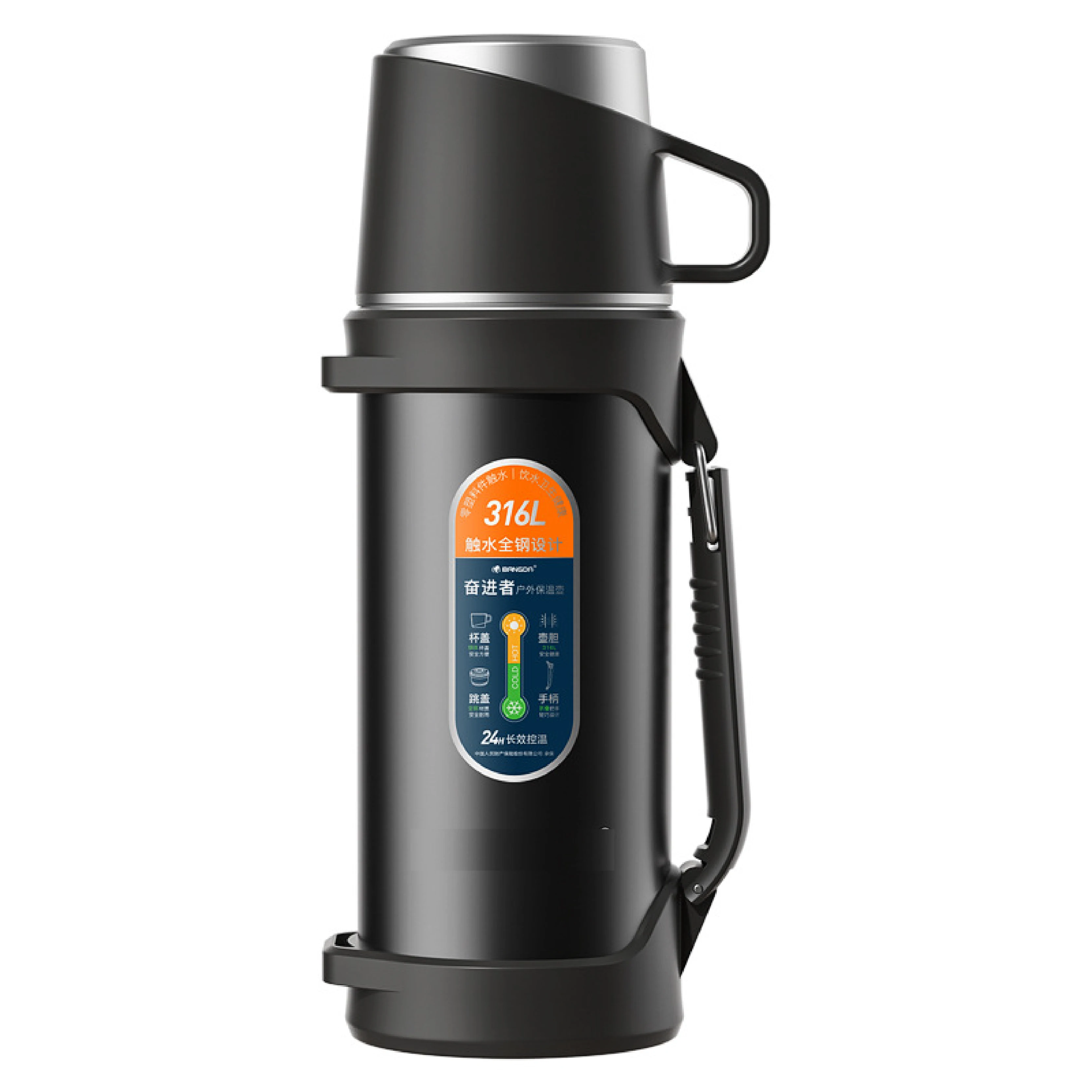
2. Container types and what they actually hold
The headline "40ft" number is misleading. Drinkware ships in three common box sizes, and the one you want depends on volume and whether you can fill it:
| Container | Usable cube (cbm) | Max payload (t) | Typical drinkware load | Best for |
|---|---|---|---|---|
| 20ft (20GP) | ~28–30 | ~21–24 | 8,000–14,000 pcs | First container, single-region launch |
| 40ft (40GP) | ~58–60 | ~26–28 | 18,000–26,000 pcs | Established SKU, one category |
| 40ft High Cube (40HQ) | ~66–68 | ~26–28 | 22,000–32,000 pcs | Mixed assortment, multi-category |
These are planning ranges, not promises. The real constraint is almost always carton volume, not unit count — a tall gift-boxed tumbler eats cube; a naked bottle in a slim carton eats less. Always plan from carton dimensions, which your supplier quotes with the PI.
3. The rules factories use when you mix SKUs
Consolidation is not free-form. Every factory we know applies the same guardrails, and you should too:
- Per-SKU MOQ still applies. Mixing does not lower the minimum for an individual SKU. If a custom tumbler's MOQ is 1,000 pcs, putting it in a mixed container does not make 300 acceptable.
- Each SKU is a separate production batch. Color, decoration and mold setup are scheduled per SKU; consolidation happens at the warehouse, after production.
- Carton uniformity helps. Mixed products are fine; wildly mixed carton sizes waste loading space. Ask for standard carton footprints where possible.
- One shipment, one set of documents. Commercial invoice, packing list and certificates cover the whole assortment — easier for customs than several parcels.
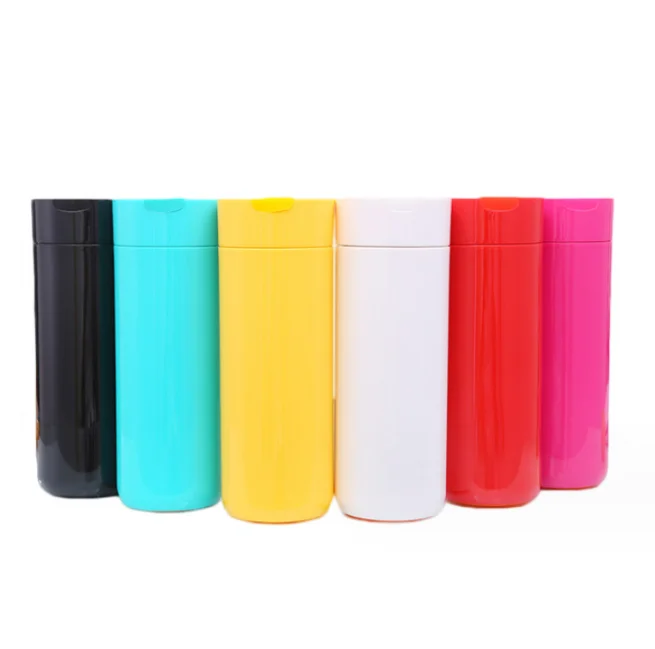
4. Cube vs weight: planning a balanced load
Stainless drinkware is a "cube-out before you weight-out" product for bottles, but a "weight-out before cube-out" product for dense flasks and lunch boxes. Plan for both:
| Product | Usually limited by | Planning tip |
|---|---|---|
| Plastic sports bottles | Cube | Light; you will fill the box with air before weight |
| Insulated steel bottles | Balanced | Watch both — large sizes trend weight |
| Flasks / growlers | Weight | Heavy steel; you may hit 26 t with cube to spare |
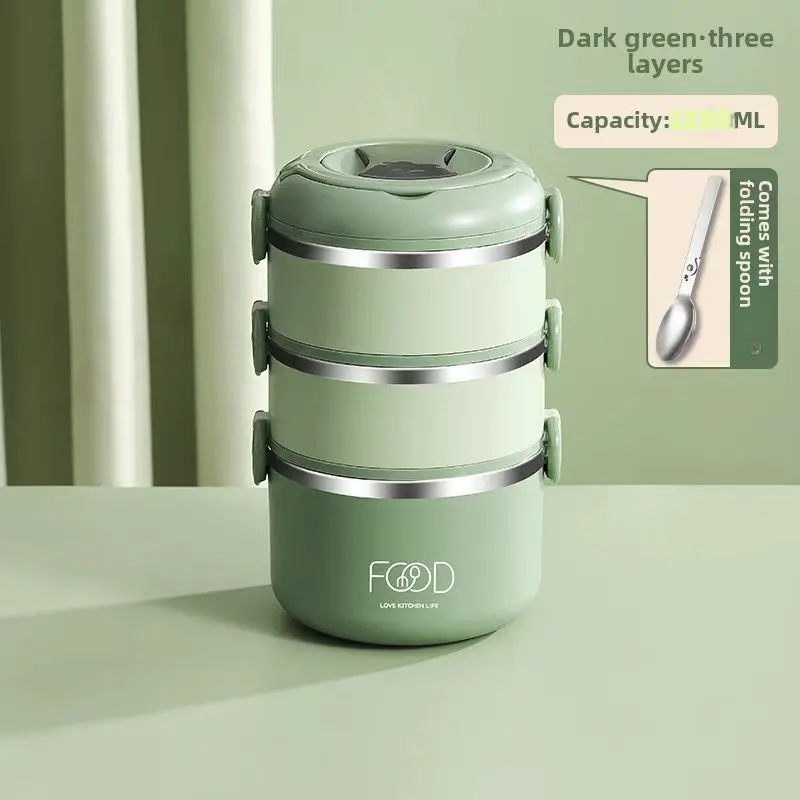
| Lunch boxes | Weight | Multi-tier steel stacks heavy; cap per container |
5. FCL vs LCL: finding the cost crossover
LCL (Less-than-Container-Load) lets you ship a few cubic meters and pay only for the space you use. FCL (Full-Container-Load) gives you the whole box. The crossover is not a fixed volume — it shifts with routing, season and fuel. As a planning baseline:
| Mode | When it wins | Trade-off |
|---|---|---|
| LCL | Under ~60–70% of a 20ft cube; testing a market; urgent replenishment | Higher $/cbm; longer transit (consolidation/deconsolidation); more handling risk |
| FCL 20ft | A full or near-full small assortment; one destination | Fixed cost whether 80% or 100% full |
| FCL 40HQ | Large mixed assortment across categories | Best $/unit, but you must fill it |
For most drinkware, the per-unit freight gap between a well-filled 40HQ and an equivalent LCL shipment runs about 10–15% in the FCL direction — before you count the lower damage rate from fewer touches. The mistake is paying FCL rates on a box that is only half full.
6. Packing, palletizing and carton planning
How goods are packed determines whether the cube math survives contact with a forklift:
- Carton footprint: standardize to 2–3 carton sizes so they interlock and stack without voids.
- Palletizing: palletized loads cost more but cut warehouse handling and claims; loose cartons fill cube better but raise damage risk on LCL.
- Assortment cartons: pre-mixed "display cartons" (e.g. 6 colors per master) save your warehouse labor — confirm the inner assortment in writing.
- Lowest compliant layer: heavy flasks on the floor, light plastic on top; label gross weight per carton.
7. A worked consolidation example
Suppose a brand launching in the EU wants a 40HQ with four categories:
- Insulated bottles, 3 colors × 500 pcs = 1,500 pcs → 25 cbm
- Tumblers, 4 colors × 800 pcs = 3,200 pcs → 18 cbm
- Flasks, 2 sizes × 600 pcs = 1,200 pcs → 14 cbm (heavy, ~16 t)
- Lunch boxes, 2 tiers × 700 pcs = 1,400 pcs → 11 cbm
Total ≈ 68 cbm and ~22 t — a full 40HQ, balanced on both constraints. Every SKU cleared its MOQ; no space was paid for and left empty. That is the target shape of a consolidated order.
8. Mistakes that quietly inflate freight
- Booking FCL on a half-full box — the single most common waste.
- Ignoring carton dimensions until after production, then discovering 20% void space.
- Mixing too many carton sizes that cannot interlock, wasting the floor.
- Forgetting weight limits on dense steel and getting reconfigured at the port.
- No load plan in writing — you cannot dispute a bad pack without one.
9. FAQ
Can I mix different product categories in one container?
Yes. A 20ft or 40ft container can mix bottles, tumblers, mugs, flasks and lunch boxes as long as each SKU meets its own MOQ. Consolidation is standard practice for brands building a full drinkware lineup, and it is how most of our 167+ model catalog gets shipped to 50+ countries.
What is the minimum volume to ship FCL instead of LCL?
As a rule of thumb, once your assorted order reaches roughly 60–70% of a 20ft container's cube (often 8,000–12,000 pcs of typical drinkware depending on packaging), FCL becomes cheaper per unit than LCL. Below that, LCL lets you ship a few hundred cartons without paying for empty space.
How do I calculate how many units fit in a container?
Use carton dimensions, not unit count. Multiply cartons-per-SKU by carton volume, sum across SKUs, and keep total under the container's usable cube (about 28–30 cbm for a 20ft, 66–68 cbm for a 40HQ). Always check gross weight too — a dense stainless load can max out at ~21–26 t before the box is full.
Does mixing many SKUs slow down production?
Not materially. Production runs in parallel by SKU, then goods are consolidated at the warehouse before container loading. The main schedule driver is the longest single SKU's lead time (typically 25–35 days after deposit); mixing mostly adds a few days of consolidation and carton sorting at the end.
Want a container-load plan built around your actual SKU mix?
Send us your target products, colors and quantities. We return a written load plan — cartons per SKU, total cube, total weight, and whether FCL or LCL is cheaper for your route.
Yongkang STWADD Houseware Co., Ltd. (the manufacturer behind SSMug) consolidates mixed assortments for importers in 50+ countries every month. We quote carton dimensions up front, issue a written load plan, and arrange freight to your port — typically FOB Ningbo or FOB Shanghai. Tell us the destination and the assortment; we will tell you the cheapest box that holds it.
Talk to our logistics team about your next container
No forms, no waiting. One email and you'll be talking to people who load these boxes weekly — typically within one business day.