In this guide
Buyers obsess over the body — capacity, steel grade, powder-coat color — and treat the lid as an afterthought. In our workshop, the lid is where most post-purchase complaints are born: a straw that leaks in a backpack, a slide that traps residue, a flip that loosens after a month of one-handed opening. Picking the right lid family up front is the single cheapest way to cut returns and protect your star rating.
1. Why lid choice decides your returns
A tumbler body is a passive vessel. The lid is the active interface — it is what the customer opens, sips from, washes and drops. Three variables decide whether it survives contact with a real user:
- Sealing mechanism. How the lid meets the body, and whether a gasket or a friction fit does the work.
- Drinking path. Straw, sip hole, or open rim — each changes spill behavior and cleaning.
- Disassembly. Can the customer take it apart to wash, or does liquid hide in a seam?
Get any one of these wrong for your target market, and the body's insulation quality becomes irrelevant. The sections below let you match a lid to the job instead of defaulting to whatever the factory shows first.
2. The six lid families at a glance
The table below covers the lid types we produce most for private-label programs. "Leak behavior" assumes the tumbler is upright in a bag; none of these are warrantied leak-proof when fully inverted except the sealed screw lid.
| Lid family | Opens by | Sealing | Best for | Cleaning |
|---|---|---|---|---|
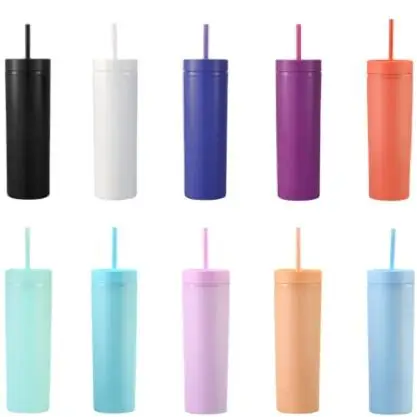
| Straw lid | Pull/screw off + sip | Low (straw path) | Iced drinks, gym, kids | Easy (few parts) |
| Slide lid | Slide cover over sip hole | Spill-resistant | Desk, car cup holder | Medium (slider seam) |
| Flip lid | One-touch hinged flip | Spill-resistant | One-handed commuting | Medium (hinge) |
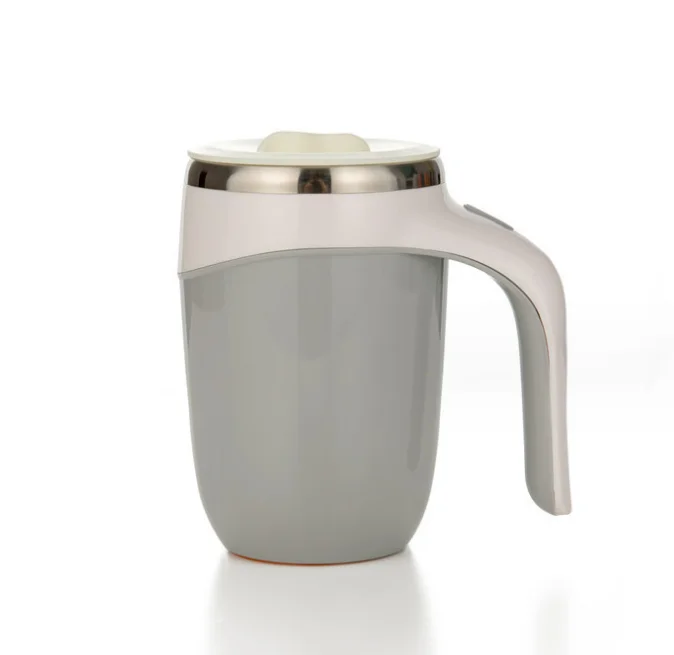
| Handle lid | Screw on + carry handle | Good (gasket) | Travel mugs, road trips | Medium (handle joint) |
| Screw-on sip lid | Thread on, sip hole | Leak-resistant | Bags, backpacks | Easy (simple) |
| Clear flat lid | Snap/press fit | Low (open sipper) | Iced coffee, café style | Easy |
3. Lid-by-lid: sealing, use case, cleaning
Straw lid
The silicone-straw lid is the volume hero of the iced-drink market — boba, smoothies, water with a straw. It is the easiest to drink from while moving and the easiest for kids. The trade-off is sealing: liquid can travel up the straw if the tumbler tips, so it is not a bag-safe lid. Cleaning is simple: pull the straw and gasket, wash, reassemble.
Slide lid
A spring- or friction-slide covers a sip hole. It feels premium and is spill-resistant on a desk or in a cup holder. The weak point is the slider seam, which collects residue and needs a small brush. Specify a removable slider for markets that care about cleanability (EU, North America).
Flip lid
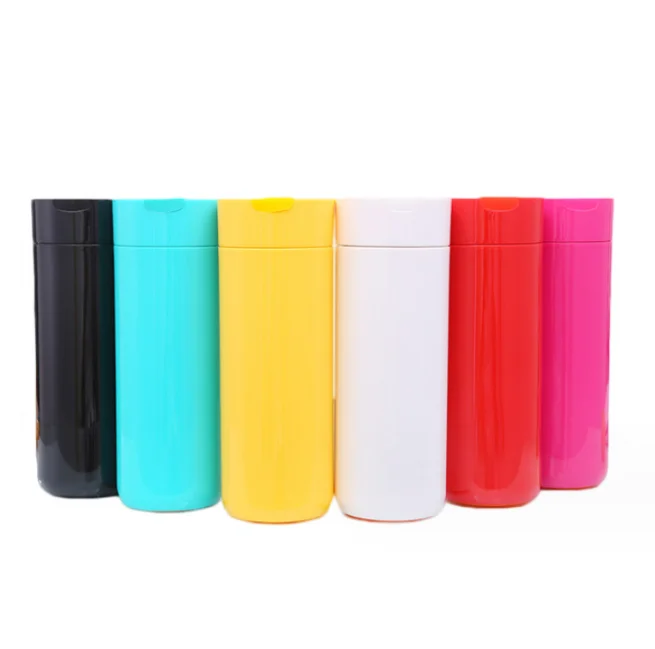
The one-touch hinged flip is the commuting favorite: open with a thumb, sip, close. It is spill-resistant, not leak-proof. The hinge is the wear part — confirm the hinge material (steel pin beats molded plastic for longevity) when you expect daily one-handed use.
Handle lid
A screw-on lid with an integrated carry handle turns a tumbler into a travel mug. The gasket does real sealing work, so it is the most bag-friendly of the non-screw families. The handle joint is where residue hides; a one-piece molded handle simplifies this.
Screw-on sip lid
The most conservative choice: thread the lid on, sip through a small hole, and it stays sealed in a bag better than anything short of a fully closed cap. Simple, few parts, easy to clean. The cost is convenience — you unscrew to drink rather than slide or flip.
Clear flat lid
The café-style press-fit lid for iced coffee and cold brew presentation. It looks the part but offers the least sealing and is not for bags. Best paired with a dome or flat clear top for takeaway branding.
4. Gasket material & food-contact compliance
The gasket — not the lid shell — is the part that touches the liquid and does the sealing. This is where food-contact compliance actually lives, and where buyers get caught out.
Silicone is the dominant gasket material for food-contact lids because it stays stable across temperature and does not impart taste. TPE is a cheaper alternative for some cold-only lids. Whichever you choose, the certificate should name the exact material and the part it covers.
5. MOQ and customization impact
Lid choice changes your order math in two ways: which SKUs you carry, and whether you need new tooling.
| Lid decision | MOQ impact | Tooling |
|---|---|---|
| Stock lid, your color/logo on body | 500–1,000 pcs / SKU | None |
| Logo embossed/printed on stock lid | 500–1,000 pcs / SKU | Minimal (print plate) |
| Two lid options on same body (2 SKUs) | 500–1,000 pcs / each SKU | None |
| Bespoke lid shape (new mold) | 1,000–3,000 pcs / SKU | New mold, amortized |
The practical move for a new brand: launch with one body and two stock-lid options as separate SKUs. You widen the range and cover more use cases without paying for a new mold, and each SKU still sits at the friendly 500–1,000 pcs floor. Reserve bespoke lids for a proven seller.
6. FAQ
Which tumbler lid is most leak-resistant?
A sealed screw-on lid with a silicone gasket and a small sip opening is the most leak-resistant for bags and travel. Slide and flip lids are spill-resistant but not fully leak-proof when inverted. Straw lids are the least sealed.
Does a custom lid increase MOQ?
Using a stock lid keeps MOQ at the standard 500–1,000 pcs per SKU. A fully bespoke lid (new mold) typically raises the floor to 1,000–3,000 pcs per SKU and adds tooling cost amortized over volume. We confirm exact figures per inquiry.
Are the lids and gaskets food-safe?
Yes. Lids, silicone gaskets and straws are produced to food-contact standards and supplied with FDA and LFGB compliance files, the same as the stainless body. We recommend requesting these files with every shipment.
Can I mix lid types across one tumbler family?
Yes, within a container as long as each lid-and-body SKU meets its MOQ. Many brands offer the same tumbler with two or three lid options as separate SKUs to widen the range without new tooling.
Not sure which lid fits your market?
Tell us your target use case and channel — gym, commute, café, promotional — and we'll recommend a lid family with the right gasket and a sample-ready spec.
Yongkang STWADD Houseware Co., Ltd. — the manufacturer behind SSMug — is a factory-based drinkware supplier, not a trading company. We assemble lids, gaskets and bodies in-house, so lid-and-body compatibility is controlled on one line rather than across three sub-suppliers. That is the difference between a lid that fits on day one and one that leaks after a container of returns.
Get a sample lid-and-body set in 5–7 days
See and feel the sealing, weight and finish before you commit. Samples are ready in 5–7 days and the sample fee is refundable on your bulk order.